Save this article to read it later.
Find this story in your accountsSaved for Latersection.
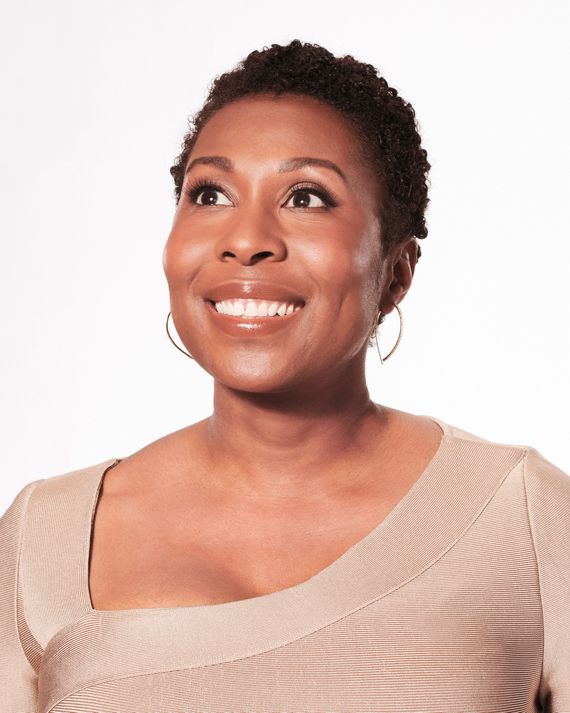
Audie Cornish has had quite the year.
Then, in April, turbulence struck CNN.
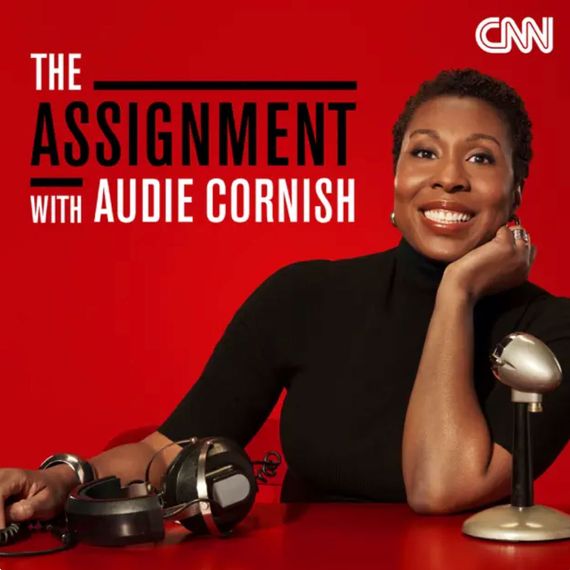
That podcast comes out this week.
What have the past few months been like for you?
Why did you leave NPR?
A handful of other hosts had left before I did.
There is a way those jobs are isolated because of the workload, and the pandemic was isolating.
I had a baby.
Should I try something new?
And for all the joking people didabout CNN+, it was something new.
I had watched the podcasting boom from the outside and felt that I had missed it.
The thing about trying stuff is that theres a risk it wont work out.
Were going to get there, whereverthereis whether its the movies or TV or radio.
Change is coming for us all.
Its important to be trying things before we can land on what the official answer is.
You chose chaos, basically.
There were glimmers of that itch prior to me leaving NPR.
Everyone thought I was crazy for doing that, but to me, it was a no-brainer.
It was a sit-down longform-interview show where people my age can see it.
When I was at NPR, I was like, We should have a live-events business.
If people are watching other podcasts live onstage, why wouldnt they watch us do that?
And I did that for two years.
Why not be where people are?
It felt out of step not to do that.
I wanted to be in all those spaces.
That made the most sense to me.
It was always going to be a multipronged thing.
Do you consider yourself an entrepreneurial person?
Listen, I have two kids, so Im already building two small companies.
Iamvery envious of my friends and my cohort David Greene, for example.
They started their own shops.
Lots of my friends have hung up shingles as consultants.
Because the skill set is so specific.
When I was coming up, there werent many places to work in the audio business.
Even the things that were on the outside they were still distributed by public-radio stations.
Radio is not in its infancy, but theres something particular to podcasting, and that still feels new.
Heres how I look at it: When I got out of college, it was about blogs.
This is so exciting.
This is so amazing.
This is not what theoldsdo.
Its the new thing!
Its not me being optimistic.
Its just a sign of things growing up.
There was always going to be an adjustment.
Its reality-check time, and thats not a bad thing.
Its necessary for growth.
Not enough people have talked aboutunionization in New York mediaandhow that hit the podcast world.
Im thinking about what you said earlier about missing the podcasting boom.
Could you talk more about that?
A lot of people thinkSerialwas a big deal, because it was so big and was a cultural moment.
The things we could bedoing.
You could write them differently, and maybe length didnt matter.
If you want to make a podcast abouta missing Richard Simmons, well, theres an audience for that.
Theres no feeling of that seems a little niche, because niche was the name of the game.
Were in a different mode now.
Its not so clear those kinds of things hit the same way.
Thats what I meant when I said I missed the podcast boom.
I was at NPR growing my career, but it was not a career of experimentation.
Honestly, its just very new to me.
CheckGoogle Trends: There was no Audie Cornish clickin happening before 2020.
I dont assume theres a guaranteed audience waiting for me nor do I feel entitled to that.
Going into podcasting, its like, Hey, I cant wait to earn a new relationship with people.
In any case, you seem to have a complicated relationship with being a public figure.
Could you tell me more about that?
I guess Im a public figure in the sense that all journalists are.
Youre doing a kind of work that is for the public in public.
I consider myself someone who is in public service, because I grew up in public-service journalism.
CNN is stocked with celebrity journalists.
Youre sitting there with Anderson Cooper.
Maybe its a Gen-X thing.
Her face was on tote bags!
Those people are celebrities to me.
I wasnt that, and to my mind, I didnt reach that.
At CNN, Don Lemon is a celebrity.
Anderson Cooper is a celebrity.
Im happy to be in my own lane.
I just dont think I occupy the same space as those folks.
Im not gonna lie.
It was certainly shockingwhen people had a reaction to my transition.
Its a happy accident.
Its kind of nice for people to look up and say, Hey, I respect you.
Thats a good feeling, you know?
Because to me, as a journalist, youre only as good as your last story.
I beat myself up a lot with my work.
I have very high standards for better or worse.
As a result, I dont have a lot of time to think about myself as a brand.
First of all, that sounds like a really healthy way to live.
I was going back through your Twitter thread from the time.
The series of GIFs, yes.
The GIFs were very important.
And second, those experiences are still a huge hurdle for NPR to retain POC talent.
How did you feel about your portrayal in that response?
As a journalist looking at the situation objectively, I understand how stories catch, so to speak.
I was at the nexus of a couple of conversations, and that sparked it.
There was a reckoning going on in newsrooms around race, right?
I was the jumping-off point for the conversation, but Im not the center of the conversation.
I didnt want to say, Look, folks, none of that happened to me.
You dont turn it on yourself.
Its like, Hey, thereisa story to be done here.
Here are all the folks you should be looking for to talk about it more.
Thats what I was trying to do.
Because evenImcurious about how their life has changed as a result.
But how did you feel?
It was the pandemic.
Look, Ill cop to leaving quickly.
That was probably jarring for people.
Im curious about the CNN+ show you were developing.
What was it supposed to be?
No matter what, I wanted to sit down with people.
So that was going to be an interview show.
The podcast Im doing now?
Also an interview show.
Thats what I do.
Will interview for food.
I like talking to people.
I mean, sure, do you want to pay me to do that?
Hell yeah, Ill do it.
Im getting into a new medium.
I really want to learn.
I wanna learn how to sit behind a desk and read a prompter.
I actually didnt come in saying, This is the show I want!
I really did have a posture of my learning isnt over yet.
You wanted to try something new.
Its all one big medium anyway.
Youve got prime-time anchors and late-night hosts becoming podcasters, right?
Everyones getting all the skills.
Whats your role on the television side now?
Im going to be doing stuff during elections.
Theres a casualness to the direction theyre taking it that has somewhat podcasting-audio vibes.
Its not an old-school anchor behind the big desk bang out thing.
Ive had a really fun time being in rehearsals and helping out.
Tell me about what drove the concept behindTheAssignment.
I love longform interviewing.
You are one post away from being viral and the center of the conversation.
Typically, your headline is Parents Screaming at a School Board.
Then you might not hear about it for a while maybe not until an election.
But the question remains: What happened to those people?
What was that really about?
Theyre in charge now?
And all these schools are sitting on more money?
And they can pull all these levers of power now?
How do you feel about it?
How did they get there?
I just have 100 questions.
The show is not thematic.
Its me finding these stories that fall between the cracks and beats of the newsrooms and finding actual people.
Do they know something that the rest of us dont really know?
Can they share it and sound like a normal person?
They cant be vulnerable.
But the rest of us can.
How do you feel about the state of the longform interview today?
One trend of note Ill say is that celebrities are doing their own work for themselves now.
They dont need journalists as a pass-through to have a dialogue with the public.
And who can blame them?
I think theres maybe been an overreliance on that.
Thinking about any show in particular?
Im not, Im not.
Its not about a story or narrative.
Its just another piece of entertainment.
I miss those shows.
This is not to knock other people doing it.
And that doesnt mean I dont listen to all this fun stuff everyone else listens to.
But as an interviewer, yeah, my heart breaks a little.
This interview has been edited and condensed for clarity.
