Save this article to read it later.
Find this story in your accountsSaved for Latersection.
On a mild Monday this past February, a tense meeting unfolded in a skyscraper in downtown Manhattan.
Four Latinx writers and activists sat on one side of a long conference table.
I wouldnt eat the sandwiches, recalled Myriam Gurba, one of the activists.
Those are the enemies sandwiches.
Prominent readers had praised it in terms worthy of a Nobel Prize.
The novelist Don Winslow called it aGrapes of Wrathfor our times.
Gurba, who is Mexican American, saw it differently.
There was a plan to protest Cumminss cross-country book tour.
The week after the novels release, the tour was canceled.
We are saddened that a work of fiction that was well-intentioned has led to such vitriolic rancor.
And well all just work it out.But I dont think that was ever really on the table.
The books editor, Amy Einhorn, was mostly silent.
Miller comes from a generation that prizes civility, one employee noted.
He could be accused of tone policing, added another.
Everybody just went dead silent, Gurba recalled.
But the proprietors of commercial literary fiction seemed curiously immune to scandal.
American Dirtfirst landedon the desks of editors in the spring of 2018.
Theres this lore in publishing that immigration books dont work, said the editor, who is white.
In a 2015 New YorkTimesop-ed, Cumminswrotethat she had a Puerto Rican grandmother but identified as white.
When her agent began sending around the manuscript, he exaggerated the authors connection to her subject.
In any case, the editor wasnt concerned about whether the book was authentic.
It was more like, Wow, this book is incredible.
Its going to be expensive.
How much is it worth?
A lot of editors had the same thought.
Einhorn, a white editor who was then the publisher of Flatiron, won the auction.
Under Einhorns leadership, Flatiron had become known for accessible fiction aimed at the broadest possible audience.
(Through a publicist, Einhorn declined to be interviewed for this story.)
It should be the work itself that speaks to you.
As both editor and publisher, Einhorn occupied a uniquely powerful position.
The early response was ecstatic.
Not all the praise came from white writers.
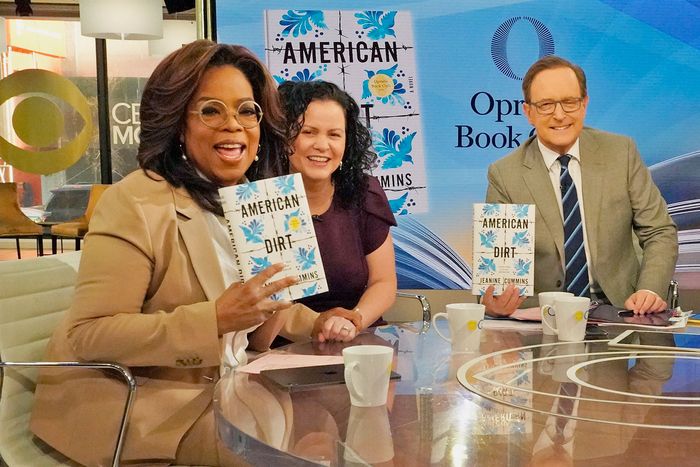
When Oprah chose it for her book club, she helped cement its fate as a best seller.
The hype elevated Flatirons already high expectations.
There was certainly a feedback loop, one employee said.
Einhorn had deemedAmerican Dirtone of those rare, profound novels that changes how we think about the world.
The author, she explained, wanted to give these people a face.
Stories about how Einhorn was talking up the book circulated around the office.
(Through a publicist, Einhorn said she had no recollection of saying this.)
Rootswas a book that explained and defined what slavery had been, one employee said.
And Jeanine was going to be the person who defined what the migrant experience was.
All these choices made the book something more than a thriller something that was supposed to be important.
But she continued to oversee the publication ofAmerican Dirt an unusual arrangement, employees told me.
She thought it was going to be a huge hit, one said.
And she wanted to check that she was the only one getting credit for it.
She did not believe Cumminss identity should have barred her from writing about the topic.
But it has to be done well, she told me.
She was shocked at the lack of care.
As many came to see it, Flatiron had inadvertently brought on this derision.
Salma Hayekapologizedfor promoting the book on Instagram and said she hadnt actually read it.
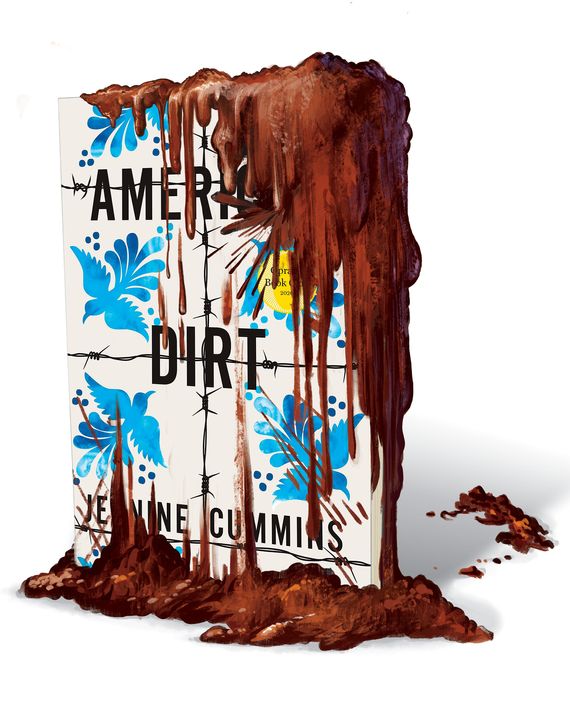
The floral centerpieces were decorated withfauxbarbed wire a reference to the illustration on the book cover.
Neither mentioned that her husband is Irish, a fact that came as a surprise to some Macmillan employees.
I found out he was Irish after publication day, and I would say my jaw dropped.
Through a publicist, Cummins declined to be interviewed for this piece.
Id give my answer, but it wasnt enough.
(The note was removed in the second printing.)
On the day the barbed-wire centerpieces went viral, employees of Macmillan gathered for the annual all-staff meeting.
One employee asked John Sargent, then the CEO of Macmillan, for his thoughts.
Are people saying this author is not allowed to write this book?
Because a woman can write a book from the point of view of a man.
Some understood his perspective.
Sargent comes from a certain publishing tradition, a Macmillan employee explained.
He is a staunch defender of freedom of speech, and he publishes all different points of view.
Others described his response as bungled.
He hadnt yet understood what it was that was bothering people, one Macmillan employee said.
Yet we ultimately go back to the novels intention, it continued.
It was poorly written and poorly conceived, one employee said of the statement.
Everyone at Flatiron was deeply unhappy with it.
Internally, the senior leadership stressed that the company should double down on its support of its author.
Amy was telling people, We dont need to pay attention to this.
Its going to go away, another staffer recalled.
It did not go away.
The owner, Valerie Koehler, a white woman, had lovedAmerican Dirt.So had her staff.
We all thought it was a really good thriller, Im not gonna lie, she said.
They related to the protagonist a middle-class mother who happened to work in a bookstore.
She was a bookseller in a city, and we were booksellers in a city.
And what would happen if we had to save our child?
That was what we talked about.
Koehler and her staff were surprised when they learned about the backlash.
We all looked at each other and thought,What did we miss?
Are we kind of tone-deaf?
She worried the protesters would make it very uncomfortable for the other people in the audience.
And I want it to be a pleasant experience when you come to my bookstore, she said.
Koehler called Flatiron to say she could no longer participate in the tour.
It attributed the cancellation of the tour to threats of physical violence and concerns about safety.
Many Macmillan employees found this statement more offensive than the first.
That was the worst message they could possibly send.
Recognizing the staff was unhappy, Macmillan held a series of town-hall meetings to listen to concerns.
Its unfortunate that those concerns were not heard, one staffer said.
Einhorn said she didnt know.
For you not to even differentiate between us is very upsetting, the employee said.
Someone else wanted to know how the barbed-wire centerpieces could have ever happened.
(The florist who designed the centerpieces had some regrets too.
I hadnt read the book.
If I knew more about it, I would have not done that.)
In late January, he began to call up the companys harshest critics to talk.
Several Macmillan employees pointedly noted that Einhorn didnt seem to engage in a similar way.
Amy just disappeared, one employee said.
Macmillan declined requests for interviews with all major players in the publication process.
Several employees suggested that Macmillan has a vested interest in preserving Amys reputation and future.
Some had heard that Holt had been struggling financially when Einhorn agreed to take over.
Holt couldnt take another hit, one employee said.
They needed her to be successful.
In the resulting two-part Apple TV+ special, three Latina writers joined Cummins onstage.
Youre saying you wanted to use your book to change peoples minds, she pointed out.
Cummins leaned toward her.
Of course, she said.
Cummins stumbled, paused, and started again.
The readers minds, she said.
I dont have a conglomerate reader.
I wrote the book because I hoped it would move people.
Even if the author didnt have a particular reader in mind, theres little question the books publishers did.
Einhorn was known for her ability to capture the interests of the book-club crowd.
Although all of the characters are Latinx, the protagonists perspective is that of a privileged outsider.
Before going on the lam, Lydia had never considered why someone might be forced to leave their homeland.
All her life shes pitied these poor people, Cummins writes in the book.
Now, the knowledge that she is one of them knocks the breath clean out of her lungs.
The story deals with a politically divisive issue, but its perspective is apolitical.
The fact that it was written by a white woman was part of that appeal, the agent added.
People are tribal, she said.
White women would rather listen to a white woman tell them about racism.
The reader, she said, is going to be someone who wants to be entertained.
The story is going to enter like a Trojan horse and change minds.
Einhorn understood her audience.
She would often say in meetings, Is a woman in Kansas going to buy this book?
several Macmillan employees recalled.
Is she going to hear the pitch and want to read it?
She continued, To be realistic, to meet people where they are will sell more books.
A Latinx employee at Macmillan said the book had achieved exactly what they meant for it to do.
Publishers are not set up to be moral companies, they said.
They are set up to sell books to readers.
Publishers, of course, could imagine different readerships.
After the meeting with DignidadLiteraria, Flatiron made a number of concrete changes to its business.
It hired Nadxieli Nieto, a board member ofLatinx in Publishing,as an editor-at-large.
(The company would not share the results of these audits.)
After Einhorn moved to Holt, Macmillan replaced her with a white editor named Megan Lynch.
Shes thinking about authors who are going to be a part of what the future of books looks like.
Each of the big-five publishers has hired executives of color, in some cases for prominent roles.
Some authors of color have received seven-figure advances.
One Macmillan employee put it bluntly: A book likeAmerican Dirtwill absolutely happen again.
For its part, Macmillan remains dedicated to the novel and its author.
Clearly the book resonated with a wide audience.
